Where to Start Digging
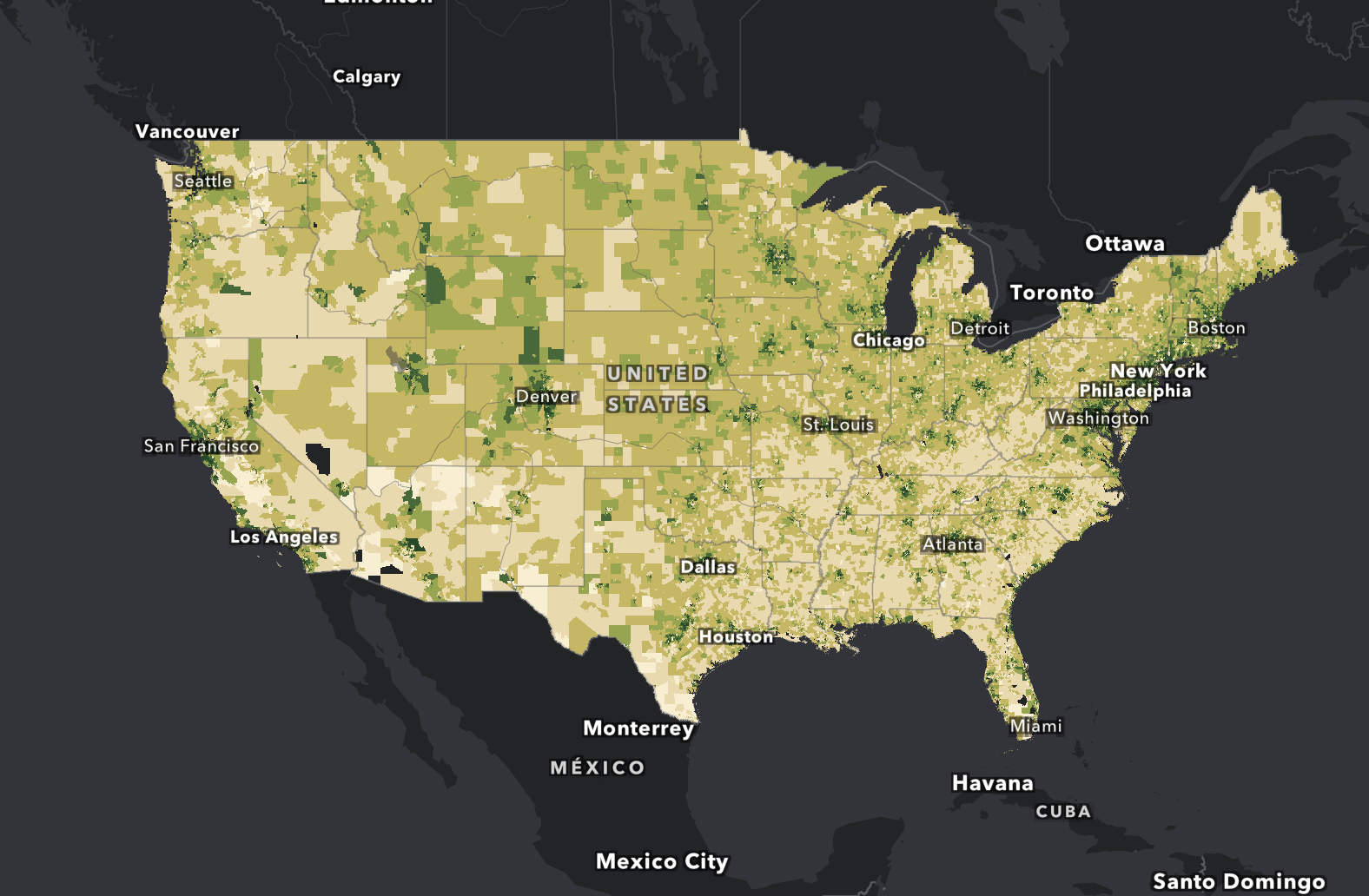
Every community has a geography of books and reading. This landscape shapes the reading norms of households.
For a long time, most of this geography has been invisible to leaders. We have had outcomes, stories, and isolated data points, but we have not had a shared picture of conditions across a defined place. Modern mapping changes that. The conditions that grow readers are already present in some communities — but they are not evenly distributed. Making them visible allows a community to see patterns, coordinate across partners, and target action where it can take root and spread.
Community Conditions
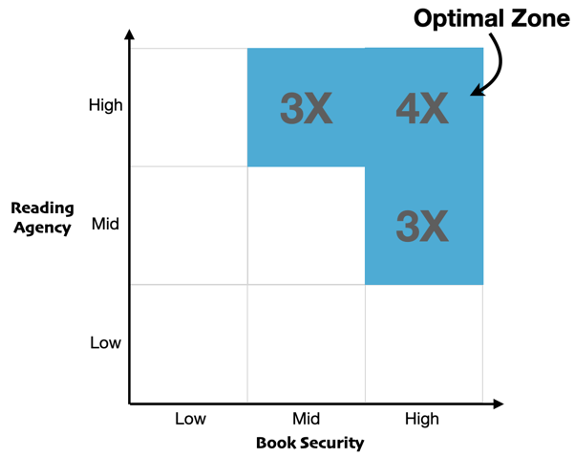
Unite has originated Community Conditions to describe the literacy landscape of a place using three bands, Emerging, Developing, and Sustaining. Our base map assigns colors to census tracts by condition, and school boundaries can be overlaid to reveal variations inside a school community. The colors function like soil conditions, guiding where to start Book Garden projects and what level of support is needed. The GROZ estimate is shown as a supporting value that explains the condition band for a given area.
The GROZ Estimate
GROZ Estimate is the estimated percentage of households in the Growing Readers Optimal Zone within a defined area. The GROZ estimate is used as a landscape gauge to help communities see variation across neighborhoods and interpret the Community Conditions bands.
Optimal Zone
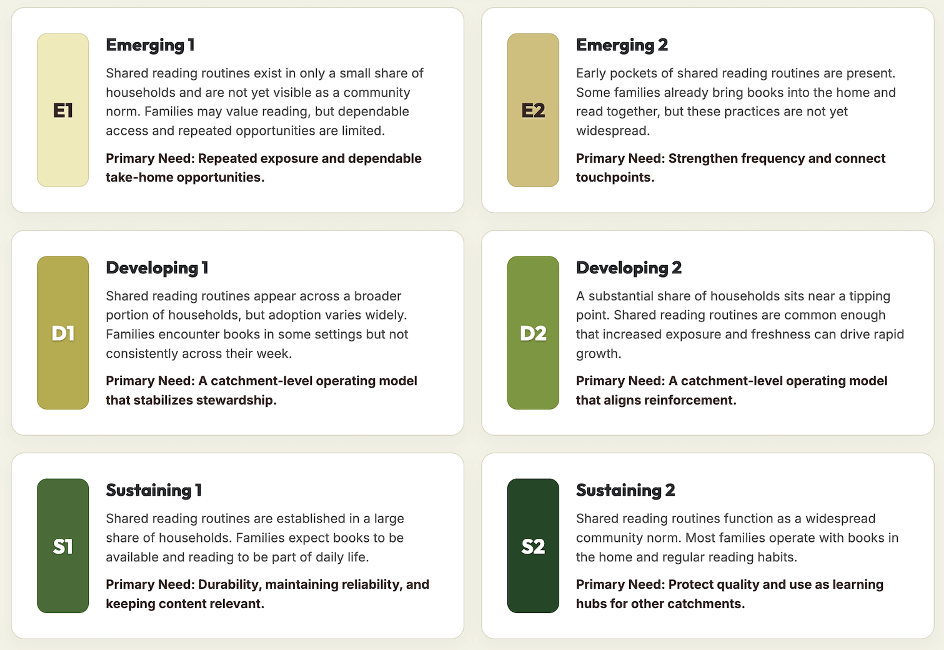
The Growing Readers Optimal Zone (GROZ) is the household state where books in the home (book security) and shared reading frequency (reading agency) are strong enough to reinforce a daily or almost daily reading norm. The Optimal Zone is the upper corner of the 3×3 grid. It includes three cells where access and shared reading are strong enough to reinforce each other.