
Measuring Access to Books
We all know that a desert is a dry, arid region with harsh conditions for sustaining life. The desert metaphor has been used in many disciplines to describe a lack of resources. For example, a “food desert” is a geographic area where affordable and nutritious food is in scarce supply. Unite for Literacy has used the desert metaphor to illustrate the availability of literacy resources in geographic areas.

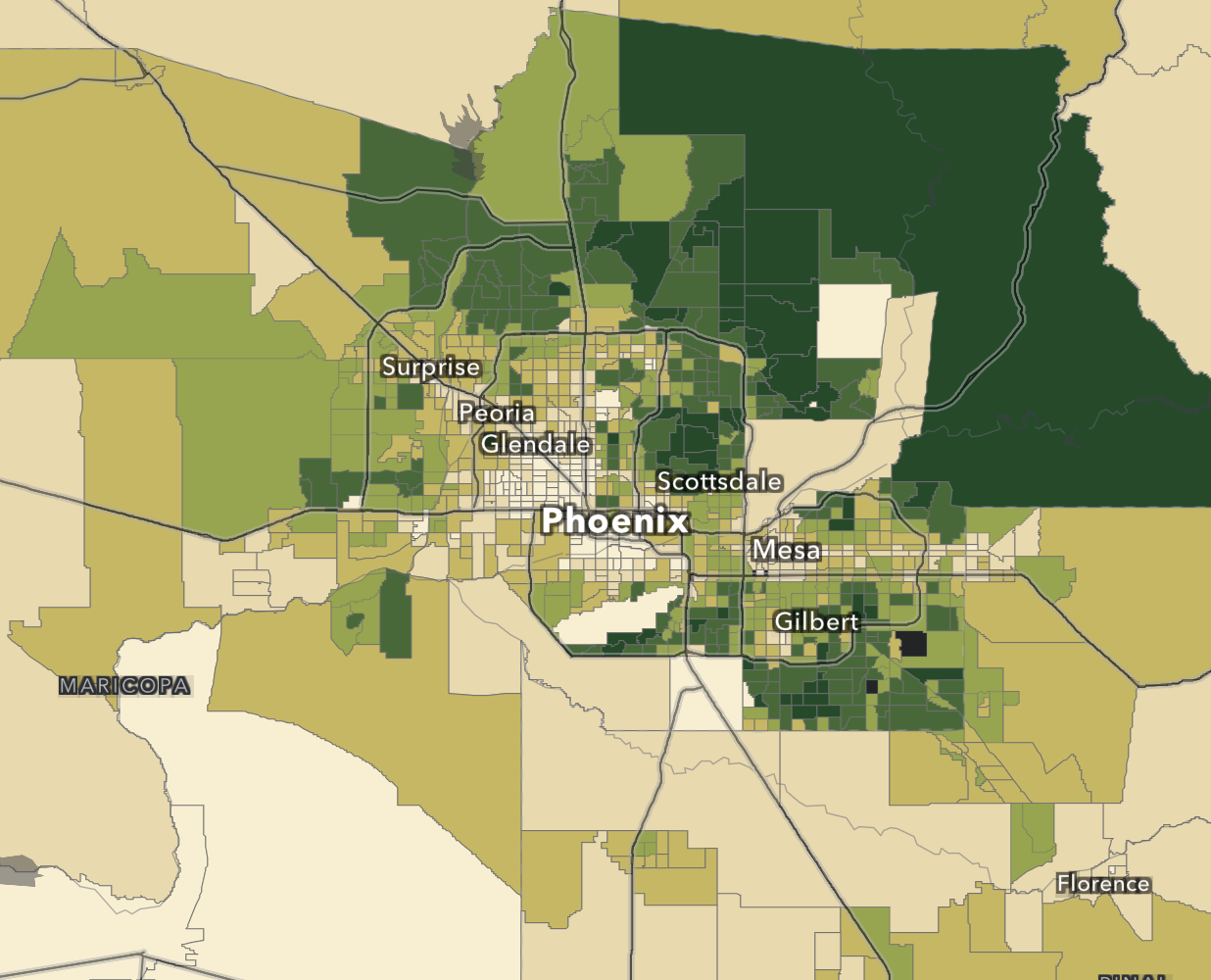
Book Deserts Illustrated
In 2014, we introduced the first version of our book desert map. We provided ESRI, the geographic information system (GIS) experts, with data gleaned from the National Assessment of Educational Progress (NAEP) and the U.S. Census Bureau that included a range of prediction variables - book counts, family income, culture, and home language. The resulting map predicted the percentage of households in a geographic area that contain at least 100 books.
Fertile Ground
In 2023, we worked with the Colorado State University Geospatial Centroid to refine the book desert map. The Centroid team compiled and analyzed data from NAEP, the Census Bureau, and Diversity Data Kids, along with survey responses from more than 10,000 participants in the Unite Growing Readers program. We believe the new map more consistently and accurately identifies how likely households within census tracts are to have an abundance of books when compared to other tracts.